New York is facing an unusual incarnation of Denial of Service, in this case public transport. Just like on the web, thats’s extremely annoying and in this case, really has impact on peoples’s lives. From the article:
“The reports caused major disruption,” says Wikipedia, “affecting approximately 140,000 passengers and 1,000 flights.”
Asymmetric warfare: someone is pulling emergency brakes on NYC subway cars
In today’s edition of privacy related topics, it is Google that apparently stored customer passwords in plaintext. Google didn’t disclose which (enterprise) customers have been affected, but was clear that improper access is out of question. With this recent incident, Google joins ranks of Facebook, Instagram, but also Twitter and LinkedIn.
Google says it discovered a bug that caused some of its enterprise G Suite customers to have their passwords stored in an unhashed form for about 14 years.
The organisation that I am part of introduced an overlaying Product Management department only fairly recently, less than a year ago. Early in the time it was exciting to see this role dedicated to market and customer perspective, but it raised questions over how this was different from Product Ownership from day one.
Over the course of the past year many discussions have been led and lot’s of articles have been led. This week Anthony Murphy shared his perspective and experiences on the Product Coalition. While my own experiences with this separated role have been predominantly positive, I tend to see the necessity to split responsibilities for larger organisations. The article is reflecting on why the Agile movement created the Product Owner in the way it did and how it was meant to abolish the Product Manager to start with.
Another week, another Facebook leak. This time an Instagram dataset with apparently scraped profile information was found online.
A massive database containing contact information of millions of Instagram influencers, celebrities and brand accounts has been found online. The database, hosted by Amazon Web Services, was left exposed and without a password allowing anyone to look inside. At the time of writing, the database had over 49 million records — but was growing by […]
A product’s success is not only defined by its features. Whether it can win in the market to a large extent is owed to the environment it is offered. Customer requirements, competitive offering, market climate, environmental conditions, total cost of ownership (TCO) can have an impact on the products success. A competitive overview is essential for any product manager and a competitive analysis can help sharpen the view.
Product School just today let Joao Fiadeiro share the experience he gathered during his tenure at Google as a Product Manager for Youtube.
Competitive Analysis and Strategy To Win by YouTube PM in Product School.
Already on Friday, Fastly, one of the more prominent representatives of the Website acceleration technology business, went public. Despite two days old, still worth mentioning. The San Francisco based company can be found under the label NASDAQ: FSLY. Measured by the initially offered price of 16$/share, the first day of trading close at $24.20 can be considered a successful IPO.
Fastly went public
Today, we listed on the New York Stock Exchange, marking our first day of trading as a public company.
Normalerweise lasse ich politische Ereignisse lieber un-kommentiert, und ich will Politik auch nicht zum Inhalt dieses Blogs machen. Aber die Österreichische Presse arbeitet den Fall so schön auf, dass ich an der Stelle auf diesen Hinweis verlinken will. Es hat ja auch mit Security und Privacy zu tun, wenn man das so sehen möchte. Weil von dem Vorfall in dem Text nicht einmal die Rede ist, an der Stelle auch noch einen schönen Gruß an die Bildredaktion des Standard.
Airbnb Appartement
Wer auf Nummer sicher gehen will, im Urlaub nicht überwacht zu werden, sollte einige einfache Grundregeln befolgen.
It appears Salesforce was shutting down its services May 17th 2019. Reason was a faulty configuration of scripting options, that allowed users to access to all their company’s Salesforce data. To prevent worse, Salesforce shut down.
Salesforce said the script only impacted customers of Salesforce Pardot – a business-to-business (B2B) marketing-focused CRM.
However, out of an abundance of caution, the company decided to take down all other Salesforce services, for both current and former Pardot customers.
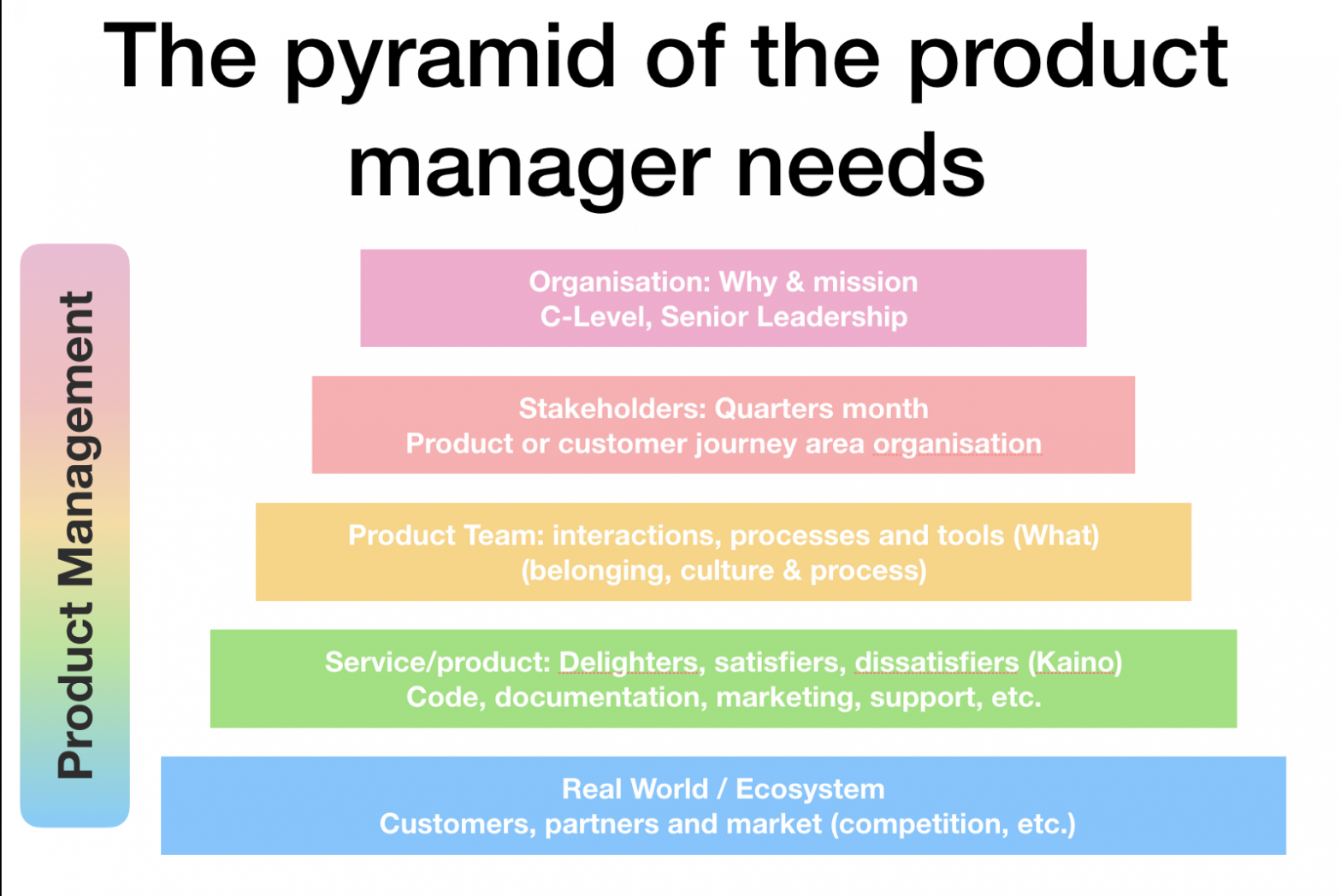
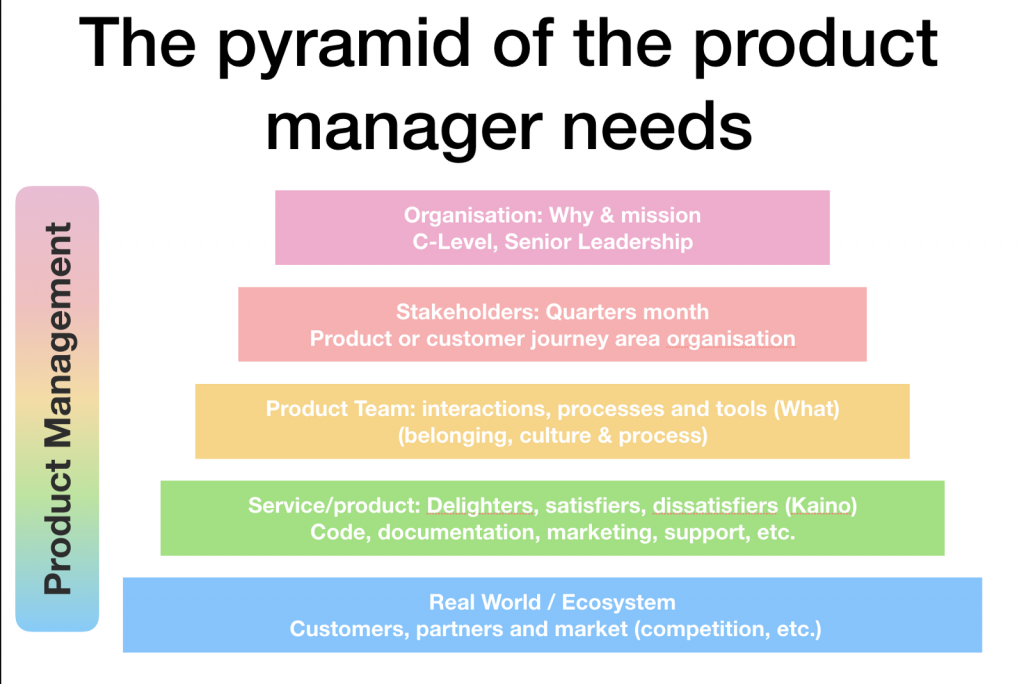
Benoit des Ligneris describes a model in his article about the environment in which product management has to navigate. This environment has many influences, and a product evolves with influences from many sources. The Maslov inspired pyramid of Product Managers needs starts with real world dependencies. The market is the basis for any product, hence is the most needed input to any product and the product management. Further in the article Benoit describes the individual layers and why they are relevant to the Product Management organisation.
While objectively everybody will agree a Product Manager will need to mediate between these layers, it may be worthwhile to evaluate the level of influence each individual layer has in a particular organisation. Most often the influence on the product is reversed and higher levels influence outcomes more than they should.
It’s the product management organisations responsibility to feed the product by its needs and not just represent but balance all layers in the decision management process. A lot like in the Maslov pyramid, a healthy product starts with basic needs.
Product Management Pyramid
A useful and visual mental model that represent the product management role in relation to its environment.