Auf dem Chaos Communication Congress hat digitale Selbstbestimmung seit jeher einen festen Platz im Programm.
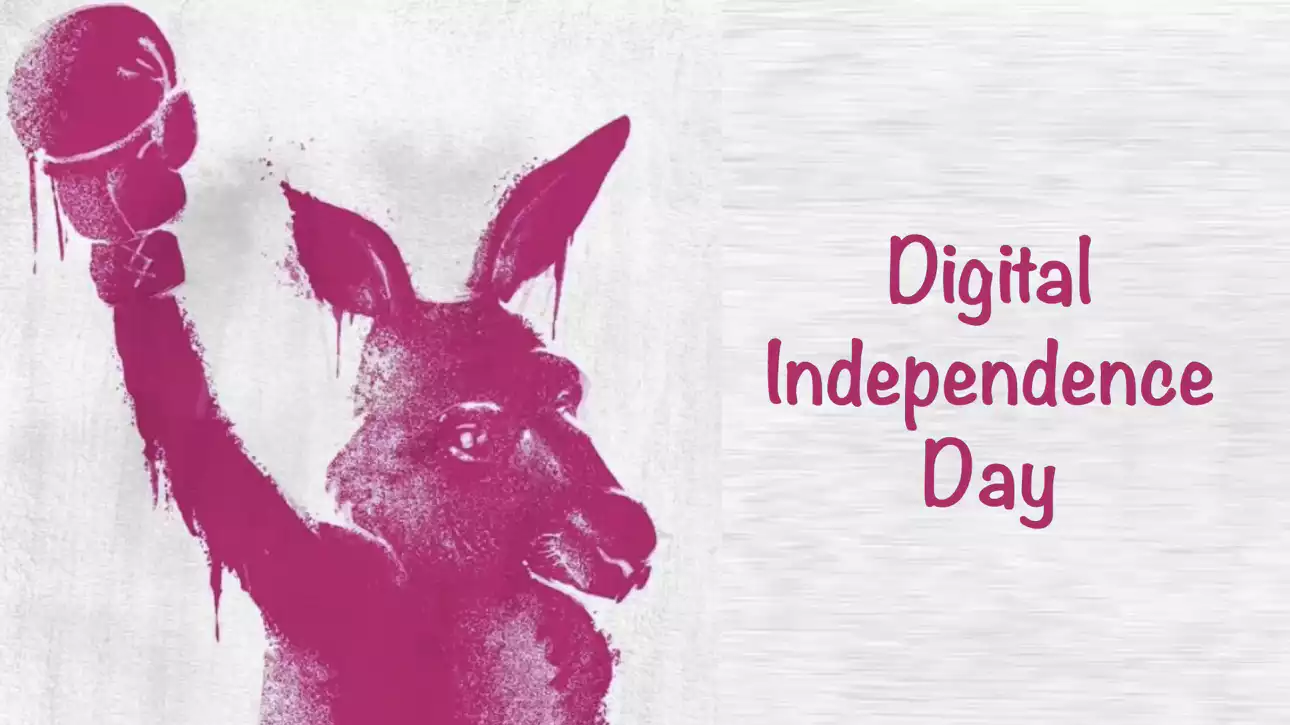
Und obwohl Marc-Uwe Kling und sein Känguru schon lange als Kritiker von Big Tech bekannt sind, ist der Vortragslot zunächst nur als Lesung aus “Die Känguru Rebellion” im Programm zu finden. Am Ende der Lesung schlägt das Känguru eine Sache vor, die man mal ausprobieren sollte. Einen “Digital Independence Day”.
“Wir dachten, wir probieren das mal aus”, kündigt Marc-Uwe zusammen mit Linus Neumann am Ende der Lesung an: “Der #DiDit is kein kostenloser Service eines Milliardärs, was seine Verbreitung ein, was seine Verbreitung ein wenig einschränkt.”
Die Initiative bekommt Unterstützung
Und ich möchte das auch mal ausprobieren. Diese Digitale Unabhängigkeit, Souveränität wie sie im politischen und geschäftlichen Zusammenhang oft genannt wird, liegt mir sehr am Herzen. Außerdem ist gerade die Zeit für gute Vorsätzen.
Am 4. Januar, also heute, ist der erste Digital Independence Day, und deshalb möchte ich heute auch etwas dazu schreiben. Ich möchte dieses Vorhaben nämlich unterstützen und mit erklären, wie es geht. Das ganze Jahr lang, jeden ersten Sonntag im Monat.
Heute möchte ich mit Alternativen zu WhatsApp beginnen. Es gibt eine Alternative namens Signal, die für beide populären Handy Platformen verfügbar ist. Signal kann für iOS, Android oder einen PC Desktop auf der Download-Page des Dienstes bezogen werden: https://signal.org/download/
Signal zeichnet sich vor allem durch seine radikale Transparenz und den Schutz der digitalen Souveränität aus. Durch seinen quelloffenen Code (Open Source) ist unabhängige Überprüfung der Sicherheitsversprechen möglich. Anstatt Nutzerdaten für Werbezwecke zu kommerzialisieren, setzt Signal auf strikte Datensparsamkeit, lückenlose Ende-zu-Ende-Verschlüsselung und macht Anwender von großen Tech-Konzernen unabhängig. Signal bietet einen geschützten Raum für Kommunikation, der Privatsphäre nicht als optionales Feature, sondern als unverzichtbares Grundrecht behandelt.
Und weil ich anbieten möchte, beim Umstieg auf alternative Lösungen zu unterstützen, bin ich natürlich selbst auch auf Signal erreichbar. Fragt mich.
The time “in between years” is busy, every time. Not to take this as an excuse, but an opportunity to rather dump my notes from #39C3 into here. It’s more than I typically blog on a average year.
Day 1
My plan for the day had the following:Although I missed
Also: Marc-Uwe Kling and Linus Neumann announced a Digital Independence Day, #DiDit, that shall happen every first Sunday a month. Mark your calendar, dump a big tech product every first Sunday a month for the next year.
The one lesson learned on day 1 really is that it’s really advisable to arrive a day early.
Data about greenhouse gas emissions, both from countries and individual factories, is often publicly available. However, the data sources are often not as accessible and reliable as they should be. EU emission databases contain obvious flaws, and nobody wants to be responsible.
Hanno Böck did some research on climate gas emission reporting and identified issues with large plants and the data available through
Browse the Internet like it’s 2022 with “Slop Evader”
Bei aller Begeisterung der ganzen Welt für die Wunder der “Artificial Intelligence” (oder “Künstlicher Intelligenz”) wird eine Seite der ganzen Entwicklung meiner Ansicht nach viel zu wenig öffentlich diskutiert. Nämlich die Akzeptanz der Benutzer. Denn allein die Existenz solcher Plugins ist ein starker Hinweis auf die Stimmung im Internet: Slop-Evader
We use it every day, but behind the scenes, email is a surprisingly complex beast. This fascinating read from e-mail.wtf breaks down the intricate layers that make email work (or sometimes, not work!).
It’s a brilliant reminder that what seems simple on the surface often has incredible engineering underneath.
What’s the highest “score” you’ve ever achieved navigating email quirks or debugging an email issue? Share your stories and “high scores” in the comments! 👇
This has been sitting in my inbox as a draft for a couple of days. Still, I wanted to make this Block post nevertheless foremost because I think it’s noteworthy. What Cloudflare does – or tries – here in this context, is basically a shift in a business model.
Under the old model, or regular approach, AI scrapers are trying to pick up as much content as they can. This practice has been under a discussion for as long as the hype took up. Content owners, be it, individual contributors or communities see a violation of their rights, whereas AI companies rely on this data to improve their models. So far, there is no law to regulate the approach to automated processing through AI.
Only Cloudflare tries to change this situation now, with their new offering, with not only blocking AI scrapers, but actually offer an option to content owners to charge per scrape.
Donald Trump is fiercely campaigning for his “Big Beautiful Bill,” a massive legislative package aiming to deliver record tax cuts and increase spending on the military and border security. Touted as a way to benefit every American and fulfill his election promises, the bill has already passed the House of Representatives but now faces significant hurdles in the Senate, even within his own Republican party. Despite White House claims of economic growth, the independent budget office projects the bill could add a staggering $2.8 trillion to the national debt over the next decade, raising concerns among some Republicans.
The core of the Senate’s resistance lies in the bill’s financial implications and proposed cuts. While many Republican senators support tax relief, they disagree on how to offset the costs. Some advocate for deeper cuts to essential health and social programs like Medicaid and food assistance for low-income families, aiming to reduce the national debt. However, senators like Lisa Murkowski of Alaska vehemently oppose these cuts, arguing they would harm vulnerable populations and rural healthcare, creating a “red line.” Further complicating matters are proposed eliminations of subsidies for renewable energy and electric vehicles, a key part of the previous administration’s economic plan, which also draws opposition from several Republicans.
With four Republican senators potentially holding the decisive votes, the “Big Beautiful Bill” faces an uncertain future. Trump has set an ambitious deadline of July 4th for its passage and has reportedly threatened dissenting senators with political consequences. The bill, if passed, would be one of the largest tax packages in U.S. history, but its passage is far from guaranteed as internal party conflicts over fiscal responsibility and social safety nets continue to erupt.


 Alexander Gerst using a Sextant