Already on December 5th, W3C announced a finalized standard for WebAssembly.

Already on December 5th, W3C announced a finalized standard for WebAssembly.
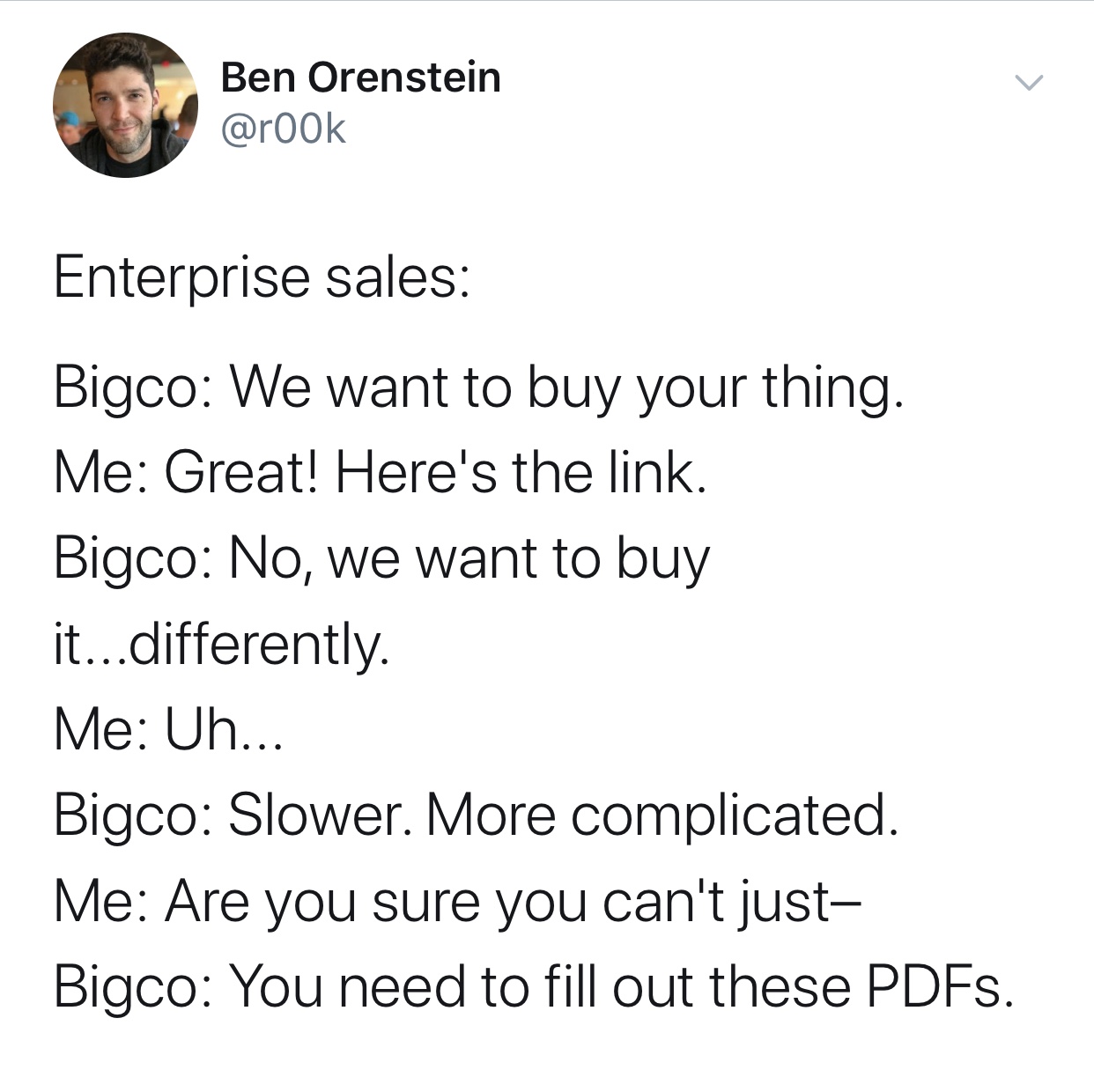
@r00k on Twitter nailed it
Python, the programming language, gained lot’s of popularity only in the past decade. In particular for big data applications, machine learning and data science the language is almost without alternative. But also for tool development or web applications backends, Python has huge adoption. Reasons are it’s huge ecosystem and a friendly, constructive community. Despite it’s newer competitors it has been around for 30 years. One of the most appreciated benefits is the steep learning curve, that allows virtually everyone to understand Python code.
Dropbox has an interview with Guido van Rossum, who published the first version of the language in 1989. The conversation revolves around the purpose of code and how python helps improve cooperation and productivity.

“You primarily write your code to communicate with other coders, and, to a lesser extent, to impose your will on the computer.”
Guido van Rossum
A conversation with the creator of the world’s most popular programming language on removing brain friction for better work. Source: The Mind at Work: Guido van Rossum on how Python makes thinking in code easier
Technical University Munich Institute for Ethics in Artificial Intelligence launches a speaker series to bring experts from all over the world to Munich and talk about Ethics and Governance for Artificial Intelligence. The Series kicks off with an Inaugural Session with Lionel P. Robert on December 13 – 10:00 am – 11:30 am.
With its new Speaker Series, the TUM Institute for Ethics in Artificial Intelligence is bringing experts from all over the world to Munich to talk about Ethics and Governance of […]
Part of the compelling nature of SaaS Products is the possibility to understand the user and improve on the go. Any Product Manager will literally have to understand what are the use-cases for customers and how to focus on the important areas. Just recently our team led the debate which metrics would be the right ones to focus on.
Nancy Wang, Head of Product Management at Amazon Web Services, highlights six product metrics enterprise SaaS companies should track.
In this Article, Nancy Wang, head of Product Management at the most successful cloud service providers, shares her insights on important metrics to keep an eye on. The possibility to understand often goes overboard and requires focus.
The case under discussion in the article revolves around paid products. Derived metrics are a foundation that serves as a blueprint to other products in the SaaS space. Goals differ, but ultimately, to make a product successful, it requires an understanding of how successful customers were, using the product. Following the established funnel pattern, users are being segmented into funnel. Along that funnel, the metrics acquired need to reflect the stage of the journey the user is on.
At the top of the funnel, most often the interaction is anonymous and requires profiling to understand the audience coming in. Further down in the funnel, metrics capture engagement and transaction. Towards the end of the funnel, the metric needs to relate to retention.
Source: Do You Measure Up? Metrics for Enterprise SaaS Product Managers
Mentionable improvements are:
Details are in the announcement.
Nachdem die SPD in München mit Limux vorerst gescheitert ist, will die CDU Open Source für Verwaltungsaufgaben fördern. Ausserdem soll Open Data von der Forderung “Public Money?, Public Code!” partizipieren. Die CDU nimmt damit eine Position der Free Software Foundation Europe (FSFE) ein.
via Golem

Customer Relationship Management ist schon länger der am stärksten wachsende Software-Markt. Als Gewerbetreibender kommt man nicht umhin, sich mit dem Trend auseinanderzusetzen. Nur durch den Einsatz von Software kann man seinen Kunden besser verstehen und so sein Angebot verbessern. Heute möchte ich einmal kurz die andere Perspektive einnehmen, und eine kurze, aber mir sehr auffällige Erfahrung aufzuschreiben.
(more…)Starlink will make Stargazing more difficult in the near future.
via Forbes.
Tesla announced an electric ‘Cybertruck‘, at a low price, that has a long range. Meanwhile, the 2017 announced Semi Truck, starts production with ‘limited volumes‘.