Category: Internet & Culture

Category: Internet & Cloud. This brand new thing: Internet & Cloud. Even though the technology is around for way more than 30 years, it is a never drying source of news and discoveries. The new channel of communication created a entirely new culture and created new  businesses, fueling innovation  and creativity.

All those things that clearly relate to something ‘new media’, items and thoughts that would not have been possible without the internet, will go here.

  • Titan(ic) Conspiracy

    Did you wait for a conspiracy theory over the lost submarine? Here it is!

  • A punch in the face

    Sombody needs that right into their face. Sometime repeatedly.

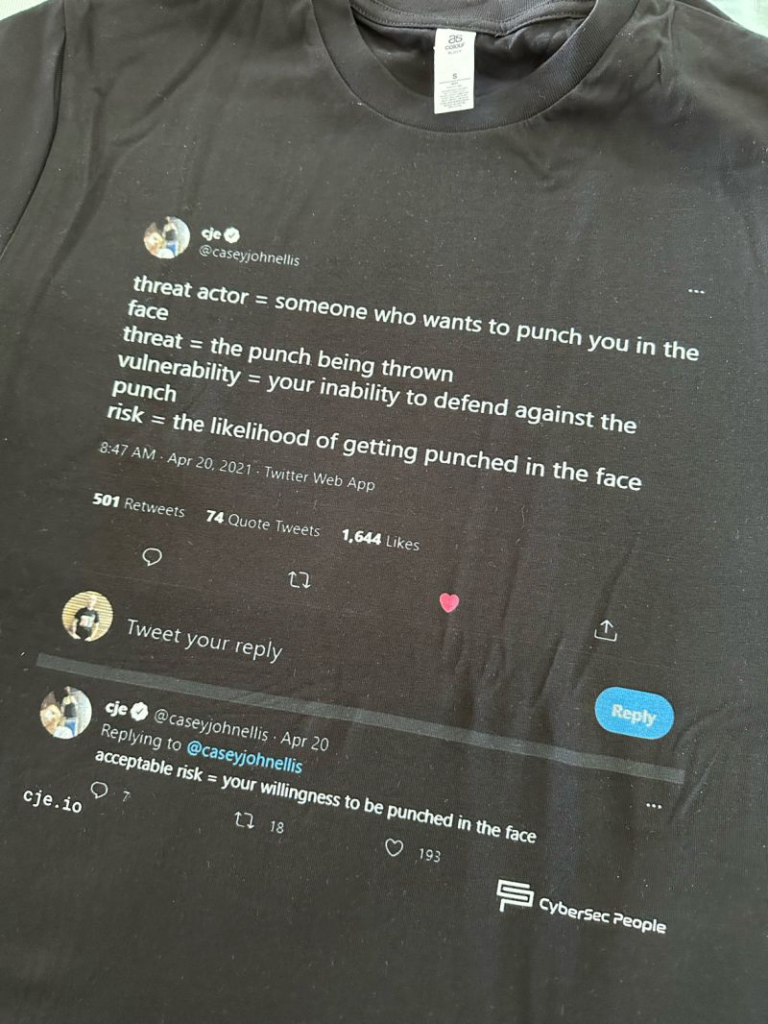
    threat actor = someone who wants to punch you in the face
    threat = the punch being thrown
    vulnerability = your inability to defend against the punch
    risk = the likelihood of getting punched in the face
    acceptable risk = your willingness to be punched in the face

    from the tweet

    risk management = your ability to see the punch coming

    Also, Ricki Burke made the original Authors Casey Ellis tweet into T-Shirts:
  • Wie KI Kreative überflüssig macht

    Wir haben in schon wiederholt davon und mit Gästen darüber gesprochen. Seit Herbst vergangenen Jahres ist Generative AI in aller Munde. Die Meinungen der Debatte reichen weit auseinander. Es ist alles dabei von der besten Erfindung die die Menschheit jemals gemacht hat bis zu “wir werden alle sterben wenn die Maschine uns nicht duldet”.

    In der ARD Mediathek ist gerade eine sehr schöne Dokumentation, die das alles ein wenig einordnet, wenn man sich mit den Konsequenzen der Technologie einmal auseinandersetzen möchte.

    Bitteschön, hier der Link.

  • Meanwhile in Poland

    https://www.instagram.com/p/CnnhxoBoMZ0/
  • Essential Device

    Technology fusion idea for the inclined nerd that already has everything and still craves innovation.


    https://twitter.com/NanoRaptor/status/1621975962312388609?s=20&t=ruCSnCekmm-q-5yTtN-8Tw

  • NVIDIA Broadcast with Eye Contact

    NVIDIA Broadcast with Eye Contact

    nvidia broadcast with eye contact

    NVidia hat dann mal eine AI dazu verwendet, Leute in die Kamera schauen zu lassen. Automatisch, ohne dass Leute da wirklich hinschauen müssen. Wenn ich das richtig verstanden habe, ist das Technik die mit “Generative AI” vergleichbar ist, über die gerade alle reden. Das Ergebnis ist jedenfalls beeindruckend, in dem Video sogar noch sehr viel mehr als auf dem Screenshot. Das ganze geht wohl sogar live, kommt aber eben auch aus der “Deep Fake” Schublade. Künstliche Intelligenz kann das Leben eindeutig besser und Produkte schöner machen, aber wie das immer so ist: Dual Use Technologie ist auch für Quatsch oder eben schlechte Sachen geeignet. Jedenfalls hier die Anwendung von NVidia:

    Product Video

    Das Zitat aus dem Artikel, das dort als Zusammenfassung angegegeben ist, wirkt schon sehr untertrieben.

    Plus new options to mirror your camera and take a selfie.
    — via NVidia

  • ChatGPT banned in NYC

    ChatGPT banned in NYC

    Die Debatte kommt sehr schnell in Gang. Nach seiner Veröffentlichung hat das AI Modell ChatGPT die Welt, oder wenigstens das Internet, gewissermaßen im Sturm erobert. Die Qualität der produzierten Texte begeistert, trotzdem ist

    Das Modell ist mit Inhalten aus, Online-Foren, Sozialen Medien, Nachrichtenartikeln, Büchern und gesprochener Sprache trainiert worden und dient dazu, dialogischen Austausch zu ermöglichen. Die Fähigkeiten der Künstlichen Intelligenz scheinen unbegrenzt – Benutzerservice, Suchmaschine, Kundeninteraktion, usw. – und so wird das System auch eingesetzt.

    Aber eben nicht ausschließlich. Schon in den Neujahrsferien hat ein Princeton Student ZeroGPT entwickelt, um Plagiate zu erkennen. Die Sorge, daß das System missbräuchlich eingesetzt wird, treibt das Akademische System – zu Recht – um

    Und so ist ChatGPT nun an Schulen und Universitäten in New York verboten worden.

  • ChatGPT for the money

    ChatGPT for the money

    With the help of ChatGPT, 5 Bucks and 10 Min of Time, you can make money. That’s the claim TikTok User Cadenboof2 makes and he’s probably right. The technology for AI is currently invading all types of creative works and the market for creative work will collapse. Here’s the 1 minute summary of how it allegedly works:

  • AI to detect AI

    AI to detect AI

    Edward Tian, Informatikstudent an der Princeton Universität, hat gestern Früh getwittert, dass er seine Weihnachts- und Neujahrferien dafür genutzt hat, Plagiate zu erkennen. Und zwar speziell solche, die ChatGPT geschrieben bzw. produziert hat.

    Nachdem ChatGPT schon AWS Zertifiziert ist und Youtube voll mit Ideen ist, die Künstliche Intelligenz für Doktorarbeiten zu benutzen, eine Naheliegende nächste Entwicklung.

    Er nennt das Ergebnis GPTZero.

  • Federated Communication

    Federated Communication

    Bei LinkedIn habe ich mir noch im abgelaufenen Jahr Gedanken zum Thema Federated Communication gemacht. Hintergrund des Post ist die Tatsache, dass Twitter gerade Nutzer an Mastodon verliert und das sogenannte Fediverse damit zunehmendes Aufmerksamkeit bekommt. Was meiner Ansicht nach eine Mode ist, wenn auch eine Notwendige.

    LinkedIn Post

    Unpopular Opinion: the #fediverse will not arrive in 2023.

    🕰️

    It has always been there. And it already plays a central and critical role. Email and Telephone are both federated systems that already carry the #customerexperience of any Sales-, Service- or e-Commerce solution.

    🔑

    Despite Customer Identity Access Management Systems (#CIAM) trying to streamline the user experience, imagine the power of access to these two factors. The fediverse made it to the top of tech news only because the entire Twitter disaster around the acquisition by Elon Musk and the following user flight to #mastodon

    🎯

    Now that it’s the end of the year, let me als try and make a few predictions for #techtrends and #communication in particular.

    📧

    The fediverse is here to stay, not only with the advent of Mastodon. It will stay in shape of Email and @Microsoft – among others – will leverage the need for federated communication in their product strategy. #OneOutlook comes to mind immediatel

    🐣

    Mastodon as a Twitter alternative will continue to grow. #Mastodon gGmbH, the company behind the product will be able to secure more funding, while maintaining the nonprofit status. #Activitypub, the protocol that powers the social web will mature and find more adoption in other products, eventually even finding its way into enterprise. You can already follow me there at https://lnkd.in/ej9PxGxf

    ☎️

    Federated communication outside of social and email will undergo corporate reconsideration. Slack and Teams are great, and see huge adoption. Users made their choice, and decision-makers will reconsider their dependency on gatekeeping products. Open Protocols like #matrix will attract attention and see more adoption. You can already reach me there at @andreas:pramari.de

    🔭

    Enterprise IT will become more critical towards data ownership and understand the power of ownership in the cloud. Vendors will make more offers to satisfy this wish. Still on the cloud – but controlled individually.

    Now prove me wrong in the comments

    Notwendigkeit für Federated Communication

    Nun lässt mich das Konzept auch beruflich nicht los. Das Internet ist in seinen Konzepten dezentralisiert. Alleine der ökonomische Druck hat die Cloud erfolgreich gemacht. Produktmanagement macht seine Arbeit und macht es Kunden zwar einfach ein Produkt zu benutzen. Aber – im Rahmen der regulativen Möglichkeiten – auch sehr schwer seine Daten zu nehmen und zu einem Mitbewerber zu wechseln.

    Das ist eine nachvollziehbare Entwicklung. Warum soll ein Unternehmen Funktionen anbieten, für die ein Kunde ohnehin nicht bezahlt. Und darüber hinaus auch nur dem Mitbewerb einen Anreiz gibt. Es ist dagegen kommerziell sehr attraktiv, eine Platform zur Verfügung zu stellen. In der Schlüsselposition zwischen vielen Anbietern und Benutzern ist ein Softwareprodukt sehr wertvoll. Der Softwarehersteller bzw. Betreiber kann diese Marktposition in Form von Preisgestaltung ausschöpfen.

    Die Wirkung dieser Strategie hat sich über Jahre hinweg entfalten können und die Abhängigkeit ist auch lange nicht spürbar. Erst wenn eine Software oder ein Angebot sich in eine andere Richtung entwickelt. Schließlich ist Software nie fertig, gerade in der Cloud sind Herstellerversprechen oft sehr schnelllebig. Und selbst wenn der Druck zu Anfang noch gering ist, gemessen am potentiellen Schmerz eines Migrationsprojektes. Die gefühlte Nachrichtenlage zeugt davon, dass Herstellerabhängigkeit bei Benutzern, aber besonders in Unternehmen zunehmend kritisch gesehen wird.

    Moving beyond Big Tech gatekeepers

    Die Gatekeeper Rolle, in die Big Tech sich selbst und mit voller Absicht manövriert hat, wird Kunden von Big Tech bewusst. Spätestens mit der Tragödie um den Nachrichtendienst Twitter nach der Übernahme durch US Milliardär Elon Musk werden Nachteile zentraler Dienste auch der breiten Öffentlichkeit bewusst.

    Die Blockade von Donald Trump ist zurückgenommen, dafür werden Journalisten geblockt. Spam nimmt stark zu. Für 8$ kann (oder konnte?) man eine “Verification” kaufen, die vorher nur einem ausgewählten Benutzerkreis vorbehalten war. Die Konsequenz: Internettrolle geben sich als Pharmaunternehmen oder Tesla aus. Die Reaktion des Unternehmens unter Leitung des neuen CEO: Sperrung aller Satire-Accounts. Und das sind nur die oberflächlichen Auswirkungen. Das war Twitterbenutzer sofort erfahren.

    eMail ist und war dagegen immer schon in den Händen der Admins. Natürlich ist es Microsoft Exchange, das den Markt für eMail Software dominiert. Google hat mit Gmail schon 2004 einen äußerst erfolgreichen Versuch gestartet, die Funktion in die Cloud zu verschieben. Und – jedenfalls in Ansätzen – durch die Breite B2C Kundschaft die Hoheit über die Technologie zu erlangen. Microsoft folgt diesem Modell mit einem Enterprise Angebot in Form von Microsoft365, das alle Funktionen, insbesondere auch Mail, gehosted anbietet. Der Trend von Unternehmen sich mit Ihrer Infrastruktur in die Cloud zu bewegen ist im abgelaufenen Jahr 2022 noch sehr ausgeprägt ausgefallen. Die schwache Wirtschaftslage wird diesen Trend sicher noch unterstützen.

    Trotzdem nimmt die Diskussion um Konzepte wie “Souvreign Cloud” und eben “Federated Communication” permanent zu.

    Standards-based interoperability will make a comeback

    Neuere Protokolle und Ansätze sind in aller Munde. Sie lösen das Dilemma zwischen Ownerschaft und Software as a Service aber nicht. Eine wahrscheinliche Entwicklung in 2023 wird sein, dass Konzepte wie Sovereign Cloud sich auf einem anderen Weg durchsetzen können. Die Trennung von Softwarelizenz und Cloud-Operation beispielsweise wird es IT Abteilungen erlauben, eine Software betreiben zu lassen, aber “Bring your own Storage” oder “Bring your own Database” umzusetzen.